

A wedding timeline can be perfectly planned on paper and still fall apart in the space between the hotel lobby and the ceremony doors. This wedding limousine transportation checklist helps you account for the details that protect the day: who rides where, when each vehicle arrives, how long every stop truly takes, and what your chauffeur needs to know before the first door opens.
For many couples, chauffeured transportation is not simply a ride from one venue to another. It is the calm, private space before the ceremony, the polished arrival in front of family and friends, and the practical way to keep a wedding party together without asking anyone to navigate, park, or serve as the designated driver.
Start With the Wedding Day Itinerary
Transportation should be planned around the full flow of the day, not just the ceremony start time. Begin with the locations for getting ready, first look, ceremony, portraits, cocktail hour, reception, and the final departure. Then add realistic travel time between every stop.
Build in room for traffic, venue access, elevator waits, loading dresses, gathering the wedding party, and photographs. A ten-minute drive rarely means a ten-minute transportation window. On a wedding day, allowing extra time is usually less expensive and far more enjoyable than trying to recover from a rushed schedule.
Confirm the Pickup Order
Decide who needs transportation at each point. The couple may travel separately before the ceremony, then together afterward. Parents, grandparents, the wedding party, and out-of-town guests may each have different needs.
Write the pickup order in plain language. Include addresses, pickup times, contact names, and the number of passengers at each stop. If a hotel has more than one entrance, identify the exact lobby or porte cochere where the vehicle should arrive. Clear instructions prevent guests from searching for a vehicle while the clock is running.
Account for the Time You Want to Arrive
Your planned arrival should be earlier than the moment you need to walk in. If the ceremony begins at 5:00 p.m., the couple may want to be at the venue by 4:30 p.m. for a quiet moment, final touch-ups, or a few photographs. The wedding party may need an even earlier arrival to line up.
This matters at the reception as well. Arriving five to ten minutes before a grand entrance gives the coordinator time to confirm the order, music, and placement without making guests wait.
Choose Vehicles by Passenger Count and Purpose
A vehicle that looks right in a photo is only the right choice if it also fits the people, attire, and itinerary. Count every passenger who will ride at the same time, including children and anyone joining for a short leg of the trip. Do not plan around maximum seating if the group will be wearing formal attire or carrying bouquets, garment bags, and personal items.
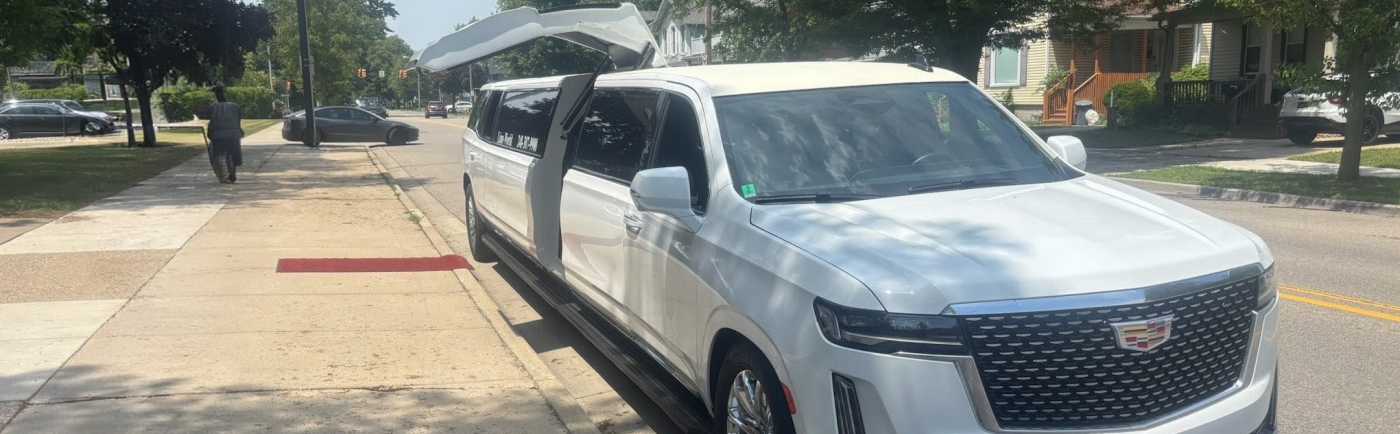
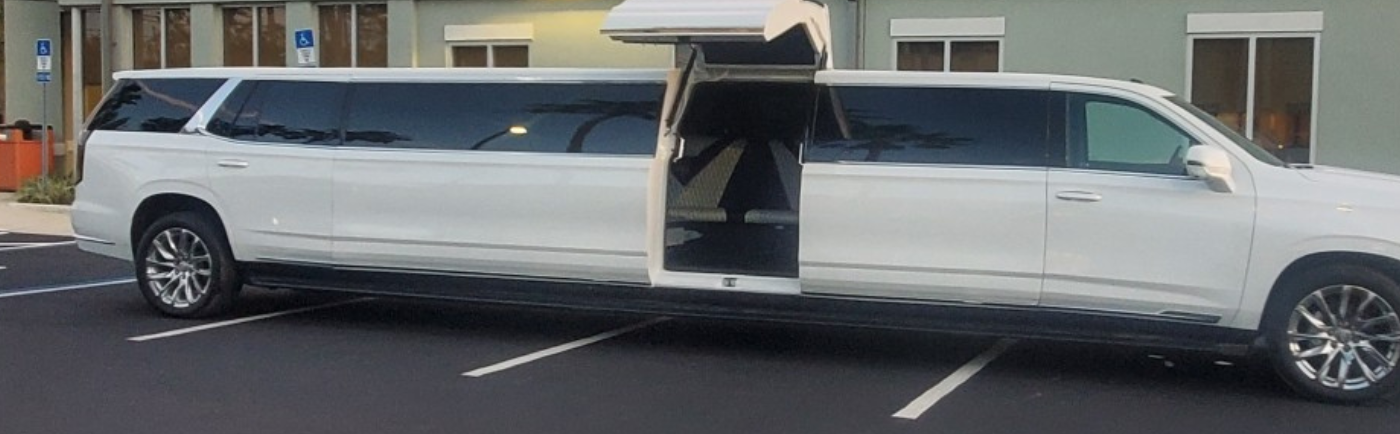
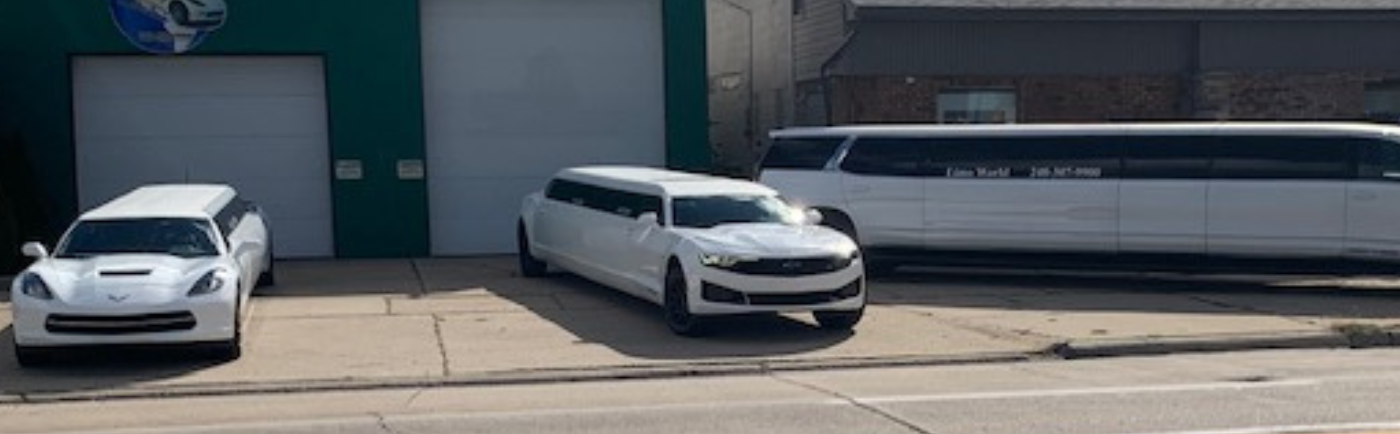
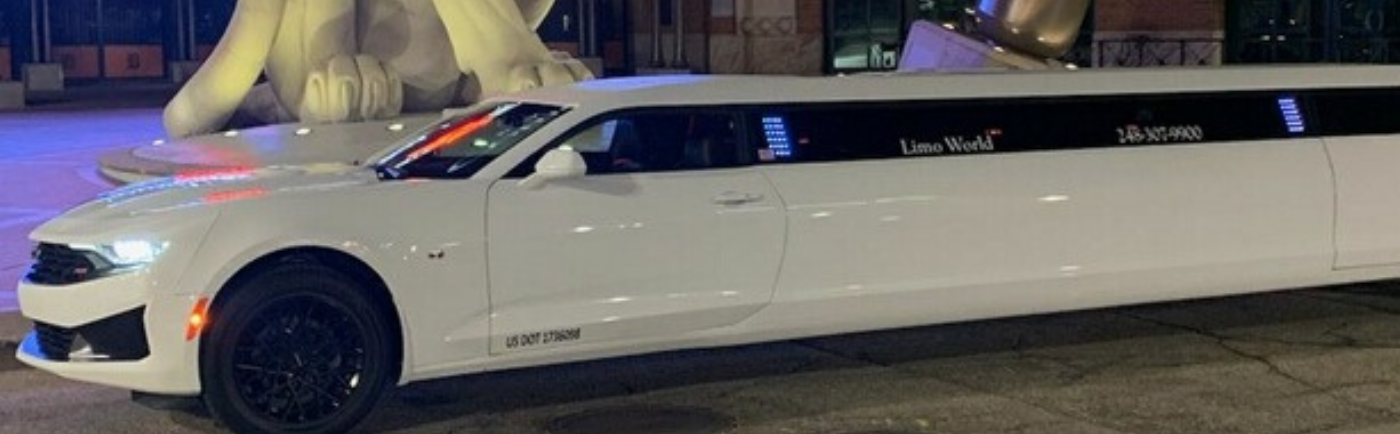
A traditional limousine creates a celebratory, private setting for the couple or a compact wedding party. An SUV limousine or luxury van may be more practical for a larger group. A luxury sedan or SUV can be an excellent choice for parents, grandparents, or a couple leaving the reception, especially when a large vehicle is unnecessary.
Consider the character of each ride. The couple’s vehicle is often about presentation and a relaxed moment together. Wedding party transportation is about coordination. Guest shuttles are about comfort, safety, and keeping the event on schedule. One vehicle type does not have to handle every need.
Confirm These Details Before You Reserve
A reservation should reflect the actual service plan, not a rough idea of the day. Before booking, have these details ready:
- The date, complete pickup addresses, venue addresses, and estimated travel route.
- The number of passengers for each vehicle and each segment of the itinerary.
- The pickup time, desired arrival time, and final scheduled drop-off time.
- The wedding planner’s or day-of coordinator’s name and mobile number.
- Any special access information, including gated communities, hotel loading zones, or venue restrictions.
- The amount of luggage, decor, signs, coolers, or personal belongings that may travel with the group.
Ask how the service time is structured and what happens if the wedding runs late. Some transportation plans work best as point-to-point service, while others need an hourly reservation so the vehicle and chauffeur remain available through photographs, venue changes, or an unplanned adjustment. The better option depends on your schedule. A simple hotel-to-ceremony transfer may not need the flexibility that a multi-stop wedding party itinerary does.
Share the Details That Help Your Chauffeur Deliver
A professional chauffeur can manage the road, timing, and arrival experience best when the itinerary is complete. Send the final schedule several days before the wedding, then communicate any meaningful changes as soon as they are confirmed.
Include the names and phone numbers of the people who can make decisions on the day. That usually means the planner or coordinator, not the couple. Couples should be enjoying the occasion, not fielding calls about a changed loading area or a delayed photo session.
Mention anything that affects access or comfort. Examples include a bride wearing a full ball gown, a passenger who needs assistance entering the vehicle, a ceremony at a venue with limited turning space, or a hotel that requires vehicle staging off-site. These are not small details. They shape which vehicle is appropriate and when it should arrive.
Plan for Photos Without Losing the Schedule
Limousines can be part of wedding photography, but the photo plan should be realistic. Tell the photographer and chauffeur whether the vehicle is needed for staged images, a first-look arrival, or an exit shot. If photos are planned between the ceremony and reception, reserve enough time for parking, positioning, and getting the group in and out.
Do not assume a vehicle can wait directly in front of every venue. Some locations have strict loading rules, busy streets, or limited space. A well-planned photo moment may require a designated nearby location instead.
Create a Guest Transportation Plan
Guest transportation is most valuable when parking is limited, the hotel is separate from the venue, or guests will be celebrating late into the evening. It is also a thoughtful choice for older relatives and visitors unfamiliar with the area.
First, determine whether guests need transportation to the ceremony, from the ceremony to the reception, back to the hotel after the reception, or all three. A return ride is often the most meaningful segment because it gives guests a dependable alternative to driving after drinks and a long celebration.
For larger groups, set a simple shuttle schedule rather than promising door-to-door flexibility. Share departure times clearly and encourage guests to arrive early. A vehicle cannot stay on time if every departure waits for one last passenger. If some guests require individual arrangements, reserve a separate vehicle rather than disrupting the main group schedule.
Prepare for the End-of-Night Exit
The final departure deserves the same attention as the ceremony arrival. Decide whether the couple leaves directly for a hotel, airport, private residence, or after-party. Confirm who will collect gifts, overnight bags, personal items, and any items that should not be left in the vehicle.
If the couple will change clothes before leaving, allow time for it. If a sparkler exit or farewell line is planned, ask the coordinator to confirm when the chauffeur should bring the vehicle into position. The goal is to create a graceful exit, not a vehicle waiting in view for an hour while the party continues.
A late-night vehicle for the couple can also provide a welcome reset. After hours of hosting, photographs, speeches, and dancing, a quiet chauffeured ride offers a moment to breathe before the next part of the celebration begins.
Make One Final Confirmation
Two or three days before the wedding, review the transportation plan with your provider and coordinator. Confirm vehicle count, passenger count, addresses, pickup times, contacts, and any venue instructions. Check the weather forecast as well. Rain, heat, road construction, and major local events can change the practical timing of the day.
On the wedding day, keep printed or saved copies of the itinerary with the planner, a trusted member of the wedding party, and the couple’s designated contact. A Limo World recommends treating transportation as part of the event design, because a composed arrival and a well-timed departure are details guests remember.
The best transportation plan leaves room for the human parts of a wedding day: an emotional parent, a delayed button, a few extra portraits, and the happy reluctance to leave the dance floor. Build that margin in early, and your limousine service can keep the day feeling polished rather than hurried.